
Echino…Who?
As Summer 2026 ramps up, so do outdoor adventures for both you and your dog. More hikes, more park days, more sniffing absolutely everything…including things we’d really rather they didn’t. Which brings us to a parasite with a funny name but a very serious reputation: Echinococcus.
So…what is it?
Echinococcus is a tiny tapeworm, but don’t let its size fool you. Unlike the more common tapeworms we see in dogs, this one poses the greatest health risk to humans. Under a microscope, its eggs can look very similar to those of other tapeworms (like Taenia species), making them difficult to tell apart.
How is it spread?
Well…poop. Yep, literally.
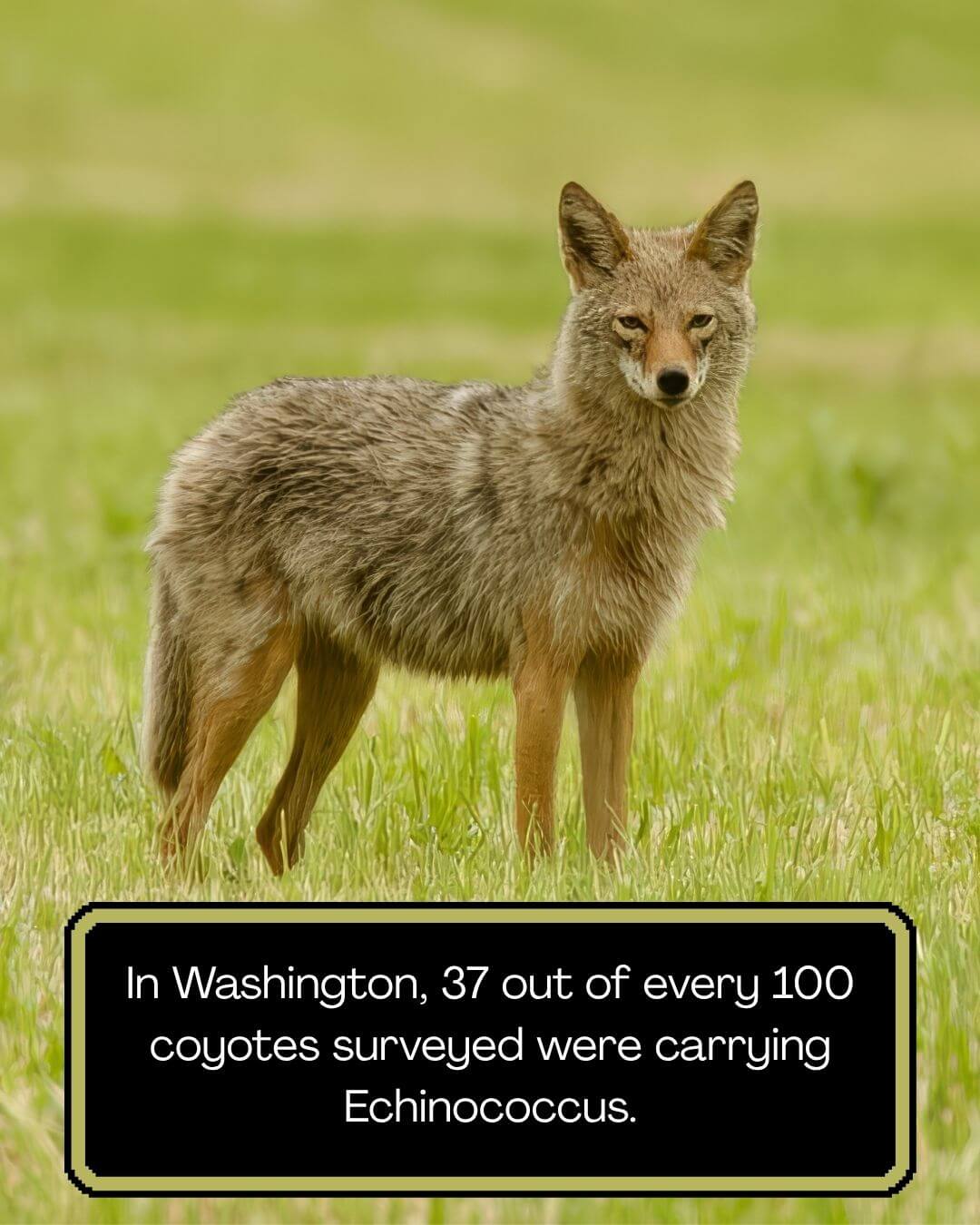
Echinococcus eggs are passed in the feces of infected dogs and wild canids like coyotes. Studies conducted right here in the Puget Sound region found that 37 out of every 100 coyotes surveyed were carrying Echinococcus.
That means when your own pup is out exploring trails, parks, or even the neighborhood, there’s a chance they could become infected and carry adult tapeworms in their small intestine, even if they look perfectly healthy.
What does this mean for people?
Humans become infected by accidentally swallowing the microscopic eggs that are shed in an infected dog’s feces.
“Ew, gross!” is the correct response…but unfortunately, it can happen more easily than you’d think. The eggs can be infectious immediately after they’re passed, so good hygiene is your best defense. Always wash your hands thoroughly after picking up your dog’s poop, gardening, or handling anything that may have been contaminated.
It’s one more reason why cleaning up after your dog is important, for everyone.
How can you protect your dog (and your family)?
One of the best ways to protect your pet is simply keeping an eye on what they get into! Preventing them from eating feces or rodents, along with bringing in annual or semi-annual samples for fecal testing, goes a long way in keeping them parasite-free.
Summer is meant for making memories, not bringing home unwanted hitchhikers. If you’re unsure whether your dog is at risk, talk with your veterinarian about the best parasite prevention plan for your furry adventurer.
For more information visit: